# click the upper-left icon to select videos from the playlist
source: International Centre for Theoretical Sciences 2016年2月15日
Winter School on Quantitative Systems Biology 2015
PROGRAM URL:
http://www.icts.res.in/program/qsb2015
DATES: Saturday 05 Dec, 2015 - Saturday 19 Dec, 2015
VENUE : Ramanujan Lecture Hall, ICTS Bangalore
DESCRIPTION:
The International Centre for Theoretical Sciences (ICTS) and the Abdus Salam International Centre for Theoretical Physics (ICTP), are organizing a Winter School on Quantitative Systems Biology from 8 to 19 December 2015 (QSB2015), as part of the ICTP- ICTS Programme in Biology. This is the fourth school in the series on Quantitative Systems Biology, held alternately at Trieste and Bangalore. QSB2015 will be hosted in the ICTS campus in Bangalore.
The School is targeted towards young researchers, particularly those at the PhD and post -doctoral level with backgrounds in the physical and mathematical sciences and engineering, who are working in biology or hope to do so. It will give participants a broad introduction to open problems in modern biology, and provide pedagogical instruction on new quantitative approaches being used to address those problems. The main school will be preceded by an intensive three-day pre-school (5-7 December, 2015) targeted to non-biologists.
QSB2015 is centered around bacteria, the simplest known forms of life. The focus is on the basics of cellular life and the principles thereof. The emphasis is on the structures and processes that allow bacteria to survive, reproduce, evolve and form communities in their environment. This is a setting that is fertile for quantitative work, both theoretical and experimental, and for grasping some universals in biology. Lecture courses on different topics are envisaged for the school by an array of distinguished lecturers. The courses will provide an intensive background to the specific topics before turning towards cutting edge research.
Subjects include
Bacterial cell physiology and growth
Metabolism, regulation and response to the environment
Structure and dynamics of biochemical networks
Bacterial ecology
Evolution
Energy, information and computation in cells
ORGANIZING COMMITTEE
Antonio Celani (ICTP)
Sanjay Jain (Delhi)
Sandeep Krishna (NCBS)
Vijay Krishnamurthy (ICTS)
Pankaj Mehta (Boston)
Matthew Scott (Waterloo)
SCIENTIFIC ADVISORY COMMITTEE
Vijay Balasubramanian (UPenn)
Nagasuma Chandra (IISc)
Matteo Marsili (ICTP)
Anirvan Sengupta (Rutgers)
Mukund Thattai (NCBS)
Michele Vendruscolo (Cambridge)
SPEAKERS:
LECTURE COURSES:
1.Mathias Heinemann (Groningen)
2.Suckjoon Jun (UCSD)
3.Tom Kuhlman (UIUC)
4.Pankaj Mehta (Boston)
5.Yitzhak Pilpel (Weizmann)
6.Nathan Price (ISB Seattle)
7.Matthew Scott (Waterloo)
8.Gary Stormo (Washington)
RESEARCH TALKS:
1.Nagasuma Chandra (IISc, Bangalore)
2.Kunihiko Kaneko (Tokyo)
3.Andreas Wagner (Zurich)
PRE-SCHOOL COURSES:
Dec 5 & 6: Basic biology for non-biologists: physiology of cells, gene expression and regulation, metabolism, cell-cell communication, ecology and evolution
Instructors:
1.Mukund Thattai (NCBS),
2.Supreet Saini (IITB),
3.Deepa Agashe (NCBS)
Dec 7: Basic mathematical methods for biologists: dynamical systems, network analysis, genomic data analysis
Instructors:
1.Sandeep Krishna (NCBS),
2.Nagasuma Chandra (IISc)
Basic processes in cells, numbers in biology by Mukund Thattai (Part 1) 1:26:14
Basic processes in cells, numbers in biology by Mukund Thattai (Part 2) 1:32:58
Regulation of transcription,translation,etc.,regulatory N/Ws,feedback by Supreet Saini (Part 1) 1:35:15
Regulation of transcription,translation,etc.,regulatory N/Ws,feedback by Supreet Saini (Part 2) 1:35:38
Cell - cell communication, heterogeneity and collective behaviour...by Supreet Saini (Part 1) 1:20:58
Cell - cell communication, heterogeneity and collective behaviour...by Supreet Saini (Part 2) 1:35:03
Microbial ecology and evolution by Deepa Agashe (Part 1) 1:35:15
Microbial ecology and evolution by Deepa Agashe (Part 2) 1:32:17
Dynamical systems applied to biology, in particular... by Sandeep Krishna (Part 1) 1:31:02
Dynamical systems applied to biology, in particular... by Sandeep Krishna (Part 2) 1:33:50
Network and graph analysis, genomic data analysis by Nagasuma Chandra (Part 1) 1:27:44
Network and graph analysis, genomic data analysis by Nagasuma Chandra (Part 2) 1:11:35
Welcome remarks by Rajesh Gopakumar (Director, ICTS) 15:05
Regulation of gene expression in bacteria by Gary Stormo (Part 1) 1:19:06
Quantitative methods in bacterial physiology by Matthew Scott (Part 1) 1:31:37
Modeling of metabolism and its regulation by Nathan Price (Part 1) 1:31:18
Regulation of gene expression in bacteria by Gary Stormo (Part 2) 1:39:09
Quantitative methods in bacterial physiology by Matthew Scott (Part 2) 1:24:04
Modeling of metabolism and its regulation by Nathan Price (Part 2) 1:34:16
Multi-level evolutionary dynamics by Kunihiko Kaneko 1:34:30
Regulation of gene expression in bacteria by Gary Stormo (Part 3) 1:34:09
Coordination of growth and the cell cycle by Suckjoon Jun (Part 1) 1:21:54
Modeling of metabolism and its regulation by Nathan Price (Part 3) 1:28:56
Evolution of gene expression by Yitzhak Pilpel (Part 1) 1:33:12
Quantitative methods in bacterial physiology by Matthew Scott (Part 3) 1:28:52
Coordination of growth and the cell cycle by Suckjoon Jun (Part 2) 1:29:48
Evolution of gene expression by Yitzhak Pilpel (Part 2) 1:39:58
Coordination of growth and the cell cycle by Suckjoon Jun (Part 3) 1:38:44
[private video]
Principles of metabolism by Matthias Heinemann (Part 1) 1:31:52
Energy, information and computation in cells by Pankaj Mehta (Part 1) 1:33:20
[private video]
Quantitative characterization of the molecular basis of evolution by Tom Kuhlmann (Part 1) 1:11:07
Principles of metabolism by Matthias Heinemann (Part 2) 1:44:21
Energy, information and computation in cells by Pankaj Mehta (Part 2) 1:32:17
From genome sequence to systems models of Mycobacterium tuberculosis... by Nagasuma Chandra 1:35:03
Quantitative characterization of the molecular basis of evolution by Tom Kuhlmann (Part 2) 1:34:29
Principles of metabolism by Matthias Heinemann (Part 3) 1:38:31
Energy, information and computation in cells by Pankaj Mehta (Part 3) 1:30:55
Quantitative characterization of the molecular basis of evolution by Tom Kuhlmann (Part 3) 1:46:52
Evolution of gene expression by Yitzhak Pilpel (Part 3) 1:39:14
Ramanujan: The inspirational story and a glimpse of his mathematics by Ken Ono 1:28:37
Presentations (Part 1) 1:01:26
Presentations (Part 2) 47:21
Presentations (Part 3) 1:09:35
2017-03-01
Non-equilibrium statistical physics (2015, ICTS Bangalore)
# click the upper-left icon to select videos from the playlist
source: International Centre for Theoretical Sciences 2015年12月20日
PROGRAM URL: http://www.icts.res.in/program/NESP2015
DATES: Monday 26 Oct, 2015 - Friday 20 Nov, 2015
VENUE: Ramanujan Lecture Hall, ICTS Bangalore
DESCRIPTION:
This program will be organized as an advanced discussion workshop on some topical issues in nonequilibrium statistical physics. The aim of the program is to bring together active researchers to discuss outstanding problems. The main areas of focus in the workshop will be
Heat and particle transport in low dimensional systems.
Large deviation functions and fluctuations in non-equilibrium systems.
Localization and thermalization.
The workshop also aims to bring together researchers from diverse areas in statistical physics so as to initiate exchange of ideas and generate collaborations among them.
The program will consist of short lectures by invited participants on the first day of each week and the rest of the time will be available for discussions. There will also be some pedagogic lectures on the following topics
Localization and thermalization (David Huse, week 1)
Fluctuating hydrodynamics (Herbert Spohn, week 1)
Macroscopic fluctuation theory (Giovanni Jona-Lasinio, week 2)
Exact results in heat conduction (Cedric Bernardin and Stefano Olla, week 2)
ORGANIZERS:
Cedric Bernardin, Abhishek Dhar, Joel Lebowitz, Stefano Olla, Sanjib Sabhapandit, Keiji Saito and Herbert Spohn
Vacancy-induced crossovers in the chiral orthogonal .... by Kedar Damle 43:42
Molecular dynamics study on a nonequilibrium motion ... by Chulan Kwon 40:58
Kubo formula and ac conductance of open systems by Onuttom Narayan 35:28
Statistical relaxation of many-body systems following a random quench by Sudip Haldar 22:25
Quantum thermalization and many-body Anderson localization by David Huse (pedagogic) 1:49:44
Quantum thermalization and many-body Anderson localization by David Huse (pedagogic) 1:35:34
Instantaneous gelation and explosive .... by Colm Connaughton 45:54
Long-Range correlations in nonequilibrium systems by David Mukamel 46:10
Equilibrium fluctuations for one-dimensional conservative systems by Marielle Simon 23:49
Random Matrix Theory and the dynamics of nonequilibrium interfaces by Herbert Spohn 1:18:21
About ICTS by Rajesh Gopakumar 13:31
Introduction to Fluctuating Hydrodynamics Theory in one-dimensional systems by Herbert Spohn 1:41:25
Efficiency of a linear Brownian heat engine by Jae Dong Noh 41:56
Quantum thermalization and many-body Anderson localization by David Huse 45:39
Introduction to Fluctuating Hydrodynamics Theory in one-dimensional systems by Herbert Spohn 1:43:37
Fast coarsening in strong phase separation by Sakuntala Chatterjee 28:21
Pressure in non-equilibrium (active) systems by Yariv Kafri 42:53
The nonlinear Schrodinger equation, nonlinear fluctuating ..... by Manas Kulkarni 46:39
Fluctuation-dominated phase ordering by Mustansir Barma 43:55
Violation of universality in anomalous Fourier’s law? by Pablo Hurtado 43:41
Fluctuations of current in non-stationary diffusive lattice gases by Baruch Meerson 43:03
Total cost of operating an information engine by Jaogen Um 21:57
Current and Density large deviations for 2d asymmetric systems by Cedric Bernardin 42:32
Additivity property and mass fluctuations in ....... by Punyabrata Pradhan 35:04
Critical dynamics of an exclusion process with hole-dependent rates by Kavita Jain 26:52
Energy diffusion and superdiffusion in acoustic and non-acoustic chains by Stefano Olla 44:17
Computing thermopower of interacting systems by Jiao Wang 32:04
Current and Density large deviations for 2d asymmetric systems by Cedric Bernadin 1:32:56
Non-equilibrium systems with current reservoirs by Dmitrios Tsagkarogiannis 39:37
Error estimates on the computation of transport coefficients by Gabriel Stoltz 39:18
Breakdown of the hydrodynamic limit for extreme current fluctuations by Yongjoo Baek 25:06
Understanding non-equilibrium: some recent advances by Giovanni Jona-Lasinio 1:08:50
Introduction to macroscopic fluctuation theory by Giovanni Jona Lasino 1:51:31
Interplay between dephasing and geometry and directed heat ..... by Yonatan Dubi 44:15
Crossover to the stochastic Burgers equation from the WASEP with a slow bond by Patricia Gonçalves 42:27
Astroparticale Physics of neutrinos Nobel Prize 2015 and beyond by Amol Dighe 1:14:49
Nonequilibrium Markov processes conditioned on large deviations by Raphael Chetrite 40:16
Introduction to macroscopic fluctuation theory by Giovanni Jona Lasinio 1:24:16
[私人影片]
Dynamic nuclear polarization and the paradox of quantum thermalization by Alberto Rosso 41:20
Thermal transport in low-dimensional lattices: negative temperature jump and ... by Dahai He 40:29
Hard-disk gas revisit by Hong Zhao 41:14
Thermal transport in various 1D structures by P. N. Gajjar 42:46
Phonons in 1D anharmonic chains by Yong Zhang 37:55
Some problems with mode coupling from fluctuating ... by Henk van Beijeren 37:09
Fluctuations, large deviations and rigidity for Coulomb systems and other ... by Joel Lebowitz 45:13
R-trivial Markov processes: Exact results for convergence to stationarity by Arvind Ayyer 41:43
Tagged particle diffusion in single file systems by Henk van Beijeren 27:27
Dynamic transitions in non-equilibrium work fluctuations of linear diffusion systems by Hynggyu Park 41:33
The Fibonacci family of dynamical universality classes by Gunter Schutz 44:34
Statistical mechanics of periodically driven closed quantum systems by Arnab Das 49:32
Current fluctuations in biomolecular systems by Udo Seifert 49:01
Time's Arrow and Entropy: Classical and Quantum by Joel Lebowitz (Public lecture) 1:17:57
Tagged Particle in Single File Motion by Sanjib Sabhapandit 44:23
Finite temperature free fermions and the Kardar-Paris- ..... by Satya Majumdar 48:51
Matrix Ansatz and Algebraic Bethe Ansatz for the Exclusion Process by Kirone Mallick 48:37
Application of duality to stochastic non-equilibrium models by Tomohiro Sasamoto 43:10
Exact gap statistics for the random average process on a ring with a tracer by Anupam Kundu 38:41
Rigorous bound on energy absorption and generic relaxation in ... by Keiji Saito 41:39
Energy current fluctuations in one dimensional systems in equilibrium by Abhishek Dhar 1:02:29
Large time zero temperature dynamics of the spherical ... by Gregory Schehr 47:46
Many-body localization in the presence of a single particle mobility edge by Subroto Mukerjee 50:06
Dynamical properties of a tagged particle in single file by Tridip Sadhu 44:17
Understanding normal transport in one-dimension: The case of the Coupled Rotator Model by Suman Das 17:47
Charge transport and thermoelectric efficiency in ..... by Bijay Kumar Agarwalla 25:42
Introductory lectures on record statistics by Gregory Schehr 1:24:46
Introductory lectures on record statistics by Gregory Schehr 1:23:39
How statistical forces depend on the thermodynamics and kinetics of driven media by Urna Basu 24:13
Modelling aggregation and fragmentation phenomena using the Smoluchowski equation by Argya Dutta 26:20
The exclusion process: a paradigm for non-equilibrium statistical mechanics by Kirone Mallick 1:22:52
1D KPZ equation: basics by Tomohiro Sasamoto 58:31
Elastically coupled random walkers: A model for molecular motor driven transport by Deepak Bhat 20:56
Quantum charge pumping - Flouquet states and topological pumping by Abhiram Soori 25:03
The exclusion process: a paradigm for non-equilibrium statistical mechanics by Kirone Mallick 1:29:31
1D KPZ equation: exact solution by Tomohiro Sasamoto 1:31:21
Isothermal transformations between NESS by Stefano Olla 1:38:58
source: International Centre for Theoretical Sciences 2015年12月20日
PROGRAM URL: http://www.icts.res.in/program/NESP2015
DATES: Monday 26 Oct, 2015 - Friday 20 Nov, 2015
VENUE: Ramanujan Lecture Hall, ICTS Bangalore
DESCRIPTION:
This program will be organized as an advanced discussion workshop on some topical issues in nonequilibrium statistical physics. The aim of the program is to bring together active researchers to discuss outstanding problems. The main areas of focus in the workshop will be
Heat and particle transport in low dimensional systems.
Large deviation functions and fluctuations in non-equilibrium systems.
Localization and thermalization.
The workshop also aims to bring together researchers from diverse areas in statistical physics so as to initiate exchange of ideas and generate collaborations among them.
The program will consist of short lectures by invited participants on the first day of each week and the rest of the time will be available for discussions. There will also be some pedagogic lectures on the following topics
Localization and thermalization (David Huse, week 1)
Fluctuating hydrodynamics (Herbert Spohn, week 1)
Macroscopic fluctuation theory (Giovanni Jona-Lasinio, week 2)
Exact results in heat conduction (Cedric Bernardin and Stefano Olla, week 2)
ORGANIZERS:
Cedric Bernardin, Abhishek Dhar, Joel Lebowitz, Stefano Olla, Sanjib Sabhapandit, Keiji Saito and Herbert Spohn
Vacancy-induced crossovers in the chiral orthogonal .... by Kedar Damle 43:42
Molecular dynamics study on a nonequilibrium motion ... by Chulan Kwon 40:58
Kubo formula and ac conductance of open systems by Onuttom Narayan 35:28
Statistical relaxation of many-body systems following a random quench by Sudip Haldar 22:25
Quantum thermalization and many-body Anderson localization by David Huse (pedagogic) 1:49:44
Quantum thermalization and many-body Anderson localization by David Huse (pedagogic) 1:35:34
Instantaneous gelation and explosive .... by Colm Connaughton 45:54
Long-Range correlations in nonequilibrium systems by David Mukamel 46:10
Equilibrium fluctuations for one-dimensional conservative systems by Marielle Simon 23:49
Random Matrix Theory and the dynamics of nonequilibrium interfaces by Herbert Spohn 1:18:21
About ICTS by Rajesh Gopakumar 13:31
Introduction to Fluctuating Hydrodynamics Theory in one-dimensional systems by Herbert Spohn 1:41:25
Efficiency of a linear Brownian heat engine by Jae Dong Noh 41:56
Quantum thermalization and many-body Anderson localization by David Huse 45:39
Introduction to Fluctuating Hydrodynamics Theory in one-dimensional systems by Herbert Spohn 1:43:37
Fast coarsening in strong phase separation by Sakuntala Chatterjee 28:21
Pressure in non-equilibrium (active) systems by Yariv Kafri 42:53
The nonlinear Schrodinger equation, nonlinear fluctuating ..... by Manas Kulkarni 46:39
Fluctuation-dominated phase ordering by Mustansir Barma 43:55
Violation of universality in anomalous Fourier’s law? by Pablo Hurtado 43:41
Fluctuations of current in non-stationary diffusive lattice gases by Baruch Meerson 43:03
Total cost of operating an information engine by Jaogen Um 21:57
Current and Density large deviations for 2d asymmetric systems by Cedric Bernardin 42:32
Additivity property and mass fluctuations in ....... by Punyabrata Pradhan 35:04
Critical dynamics of an exclusion process with hole-dependent rates by Kavita Jain 26:52
Energy diffusion and superdiffusion in acoustic and non-acoustic chains by Stefano Olla 44:17
Computing thermopower of interacting systems by Jiao Wang 32:04
Current and Density large deviations for 2d asymmetric systems by Cedric Bernadin 1:32:56
Non-equilibrium systems with current reservoirs by Dmitrios Tsagkarogiannis 39:37
Error estimates on the computation of transport coefficients by Gabriel Stoltz 39:18
Breakdown of the hydrodynamic limit for extreme current fluctuations by Yongjoo Baek 25:06
Understanding non-equilibrium: some recent advances by Giovanni Jona-Lasinio 1:08:50
Introduction to macroscopic fluctuation theory by Giovanni Jona Lasino 1:51:31
Interplay between dephasing and geometry and directed heat ..... by Yonatan Dubi 44:15
Crossover to the stochastic Burgers equation from the WASEP with a slow bond by Patricia Gonçalves 42:27
Astroparticale Physics of neutrinos Nobel Prize 2015 and beyond by Amol Dighe 1:14:49
Nonequilibrium Markov processes conditioned on large deviations by Raphael Chetrite 40:16
Introduction to macroscopic fluctuation theory by Giovanni Jona Lasinio 1:24:16
[私人影片]
Dynamic nuclear polarization and the paradox of quantum thermalization by Alberto Rosso 41:20
Thermal transport in low-dimensional lattices: negative temperature jump and ... by Dahai He 40:29
Hard-disk gas revisit by Hong Zhao 41:14
Thermal transport in various 1D structures by P. N. Gajjar 42:46
Phonons in 1D anharmonic chains by Yong Zhang 37:55
Some problems with mode coupling from fluctuating ... by Henk van Beijeren 37:09
Fluctuations, large deviations and rigidity for Coulomb systems and other ... by Joel Lebowitz 45:13
R-trivial Markov processes: Exact results for convergence to stationarity by Arvind Ayyer 41:43
Tagged particle diffusion in single file systems by Henk van Beijeren 27:27
Dynamic transitions in non-equilibrium work fluctuations of linear diffusion systems by Hynggyu Park 41:33
The Fibonacci family of dynamical universality classes by Gunter Schutz 44:34
Statistical mechanics of periodically driven closed quantum systems by Arnab Das 49:32
Current fluctuations in biomolecular systems by Udo Seifert 49:01
Time's Arrow and Entropy: Classical and Quantum by Joel Lebowitz (Public lecture) 1:17:57
Tagged Particle in Single File Motion by Sanjib Sabhapandit 44:23
Finite temperature free fermions and the Kardar-Paris- ..... by Satya Majumdar 48:51
Matrix Ansatz and Algebraic Bethe Ansatz for the Exclusion Process by Kirone Mallick 48:37
Application of duality to stochastic non-equilibrium models by Tomohiro Sasamoto 43:10
Exact gap statistics for the random average process on a ring with a tracer by Anupam Kundu 38:41
Rigorous bound on energy absorption and generic relaxation in ... by Keiji Saito 41:39
Energy current fluctuations in one dimensional systems in equilibrium by Abhishek Dhar 1:02:29
Large time zero temperature dynamics of the spherical ... by Gregory Schehr 47:46
Many-body localization in the presence of a single particle mobility edge by Subroto Mukerjee 50:06
Dynamical properties of a tagged particle in single file by Tridip Sadhu 44:17
Understanding normal transport in one-dimension: The case of the Coupled Rotator Model by Suman Das 17:47
Charge transport and thermoelectric efficiency in ..... by Bijay Kumar Agarwalla 25:42
Introductory lectures on record statistics by Gregory Schehr 1:24:46
Introductory lectures on record statistics by Gregory Schehr 1:23:39
How statistical forces depend on the thermodynamics and kinetics of driven media by Urna Basu 24:13
Modelling aggregation and fragmentation phenomena using the Smoluchowski equation by Argya Dutta 26:20
The exclusion process: a paradigm for non-equilibrium statistical mechanics by Kirone Mallick 1:22:52
1D KPZ equation: basics by Tomohiro Sasamoto 58:31
Elastically coupled random walkers: A model for molecular motor driven transport by Deepak Bhat 20:56
Quantum charge pumping - Flouquet states and topological pumping by Abhiram Soori 25:03
The exclusion process: a paradigm for non-equilibrium statistical mechanics by Kirone Mallick 1:29:31
1D KPZ equation: exact solution by Tomohiro Sasamoto 1:31:21
Isothermal transformations between NESS by Stefano Olla 1:38:58


Modern Finance and Macroeconomics: A Multidisciplinary Approach (2016, ICTS)
# click the upper-left icon to select videos from the playlist
source: International Centre for Theoretical Sciences 2016年3月9日
PROGRAM URL : http://www.icts.res.in/program/memf2015
DATES: Tuesday 22 Dec, 2015 - Saturday 02 Jan, 2016
VENUE : ICTS campus, Bangalore
DESCRIPTION:
The financial meltdown of 2008 in the US stock markets and the subsequent protracted recession in the Western economies have accentuated the need to understand the dynamic interface between the modern financial sector and the overall macroeconomy. The dominant economic framework based on Neoclassical economics that informs policy making has turned out to be grossly inadequate for this purpose as it failed to either explain or predict the nature and cause of the sudden financial meltdown and the long economic recession that followed. The conceptual and methodological gaps and fault lines of the dominant framework have necessitated approaches that go beyond conventional analyses of individual or micro economic risk and the types failures caused by imperfect working of the price mechanism in financial markets. The challenge instead is to set the problem of modern finance in the macroeconomic context.
This School aims to introduce the participants to the alternative analytical frameworks to study the workings of the modern financial sector and its implications to the economy as a whole. The modules in the School are organized in such a way that they progressively build on foundations starting from a critical perspective of macroeconomic analysis to lead the participants gradually to broader analysis beyond that is provided in the standard economic theory. The lectures will then build on this alternative conceptual perspective and explore and articulate alternative methodological frameworks in which the local or micro aspect of individual risk are integrated with the global or macro aspect of finance and money in the economy.
The list of speakers includes renowned economists and mathematicians from India and abroad.
ORGANIZERS:
Vishwesha Guttal, Srikanth Iyer and Srinivas Raghavendra
Introduction, context and the issue of real financial sector interaction by Srinivas Raghavendra 2:55:10
Macroeconomics by Amit Bhaduri (Part 1) 1:38:06
Macroeconomics by Amit Bhaduri (Part 2) 2:28:14
Modern Finance and current crisis by Gary Dymski 1:32:35
Modern Finance, Current crisis and Policy debates by Gary Dymski 4:43:43
Microeconomics: Failure of Price mechanism by Anjan Mukherjee 3:12:58
Mathematical preliminaries - 1 by Srikanth Iyer 1:37:40
Microeconomics by Anjan Mukherjee 2:47:46
Mathematical prelimiaries - 2 by Srikanth Iyer 1:40:58
Uncertainty modeling, Maximum Entropy principles and Power law by Karmeshu Kar 3:03:57
Option pricing in dicrete time by Mrinal Ghosh 3:06:35
Option pricing in continuous time by Mrinal Ghosh (Part 1) 1:16:28
Option pricing in continuous time by Mrinal Ghosh (Part 2) 1:45:51
Pricing Credit Derivatives by Srikanth Iyer 3:04:39
Stock Flow Consistency in macroeconomic theory and practice by Gennaro Zezza 2:06:07
Modern finance and Macroeconomics: connecting various threads by Srinivas Raghavendra 39:56
Introduction to Nonlinear dynamics: The case of Catastrophe theory by Vishwesha Guttal 36:36
Interbank networks and Systemic risk by Srikanth Iyer 3:14:13
Discussion - Abrupt transitions and systemic risk by Amit Bhaduri and Srinivas Raghavendra 1:11:45
Bifurcation and Catastrophy theory: Physical and Natural systems by Petri Piiroinen 4:36:11
Critical transitions and Early warning signals in Ecology by Vishwesha Guttal 3:07:35
source: International Centre for Theoretical Sciences 2016年3月9日
PROGRAM URL : http://www.icts.res.in/program/memf2015
DATES: Tuesday 22 Dec, 2015 - Saturday 02 Jan, 2016
VENUE : ICTS campus, Bangalore
DESCRIPTION:
The financial meltdown of 2008 in the US stock markets and the subsequent protracted recession in the Western economies have accentuated the need to understand the dynamic interface between the modern financial sector and the overall macroeconomy. The dominant economic framework based on Neoclassical economics that informs policy making has turned out to be grossly inadequate for this purpose as it failed to either explain or predict the nature and cause of the sudden financial meltdown and the long economic recession that followed. The conceptual and methodological gaps and fault lines of the dominant framework have necessitated approaches that go beyond conventional analyses of individual or micro economic risk and the types failures caused by imperfect working of the price mechanism in financial markets. The challenge instead is to set the problem of modern finance in the macroeconomic context.
This School aims to introduce the participants to the alternative analytical frameworks to study the workings of the modern financial sector and its implications to the economy as a whole. The modules in the School are organized in such a way that they progressively build on foundations starting from a critical perspective of macroeconomic analysis to lead the participants gradually to broader analysis beyond that is provided in the standard economic theory. The lectures will then build on this alternative conceptual perspective and explore and articulate alternative methodological frameworks in which the local or micro aspect of individual risk are integrated with the global or macro aspect of finance and money in the economy.
The list of speakers includes renowned economists and mathematicians from India and abroad.
ORGANIZERS:
Vishwesha Guttal, Srikanth Iyer and Srinivas Raghavendra
Introduction, context and the issue of real financial sector interaction by Srinivas Raghavendra 2:55:10
Macroeconomics by Amit Bhaduri (Part 1) 1:38:06
Macroeconomics by Amit Bhaduri (Part 2) 2:28:14
Modern Finance and current crisis by Gary Dymski 1:32:35
Modern Finance, Current crisis and Policy debates by Gary Dymski 4:43:43
Microeconomics: Failure of Price mechanism by Anjan Mukherjee 3:12:58
Mathematical preliminaries - 1 by Srikanth Iyer 1:37:40
Microeconomics by Anjan Mukherjee 2:47:46
Mathematical prelimiaries - 2 by Srikanth Iyer 1:40:58
Uncertainty modeling, Maximum Entropy principles and Power law by Karmeshu Kar 3:03:57
Option pricing in dicrete time by Mrinal Ghosh 3:06:35
Option pricing in continuous time by Mrinal Ghosh (Part 1) 1:16:28
Option pricing in continuous time by Mrinal Ghosh (Part 2) 1:45:51
Pricing Credit Derivatives by Srikanth Iyer 3:04:39
Stock Flow Consistency in macroeconomic theory and practice by Gennaro Zezza 2:06:07
Modern finance and Macroeconomics: connecting various threads by Srinivas Raghavendra 39:56
Introduction to Nonlinear dynamics: The case of Catastrophe theory by Vishwesha Guttal 36:36
Interbank networks and Systemic risk by Srikanth Iyer 3:14:13
Discussion - Abrupt transitions and systemic risk by Amit Bhaduri and Srinivas Raghavendra 1:11:45
Bifurcation and Catastrophy theory: Physical and Natural systems by Petri Piiroinen 4:36:11
Critical transitions and Early warning signals in Ecology by Vishwesha Guttal 3:07:35
Crystal: Fast as C, Slick as Ruby (Brian J. Cardiff)
source: GoogleTechTalks 2017年2月2日
A Google TechTalk, 1/20/17, presented by Brian J. Cardiff
ABSTRACT: Crystal is a new programming language that focuses on developer productivity, type safety and execution performance. It is statically checked and compiles to native (machine) code. It combines a type inference algorithm, compile-time macros, compile-time type introspection, automatic union types and Ruby-like syntax, allowing quick prototyping and generating efficient computer programs. It provides a Garbage Collector, uses LLVM as its backend and doesn’t run on a Virtual Machine.
In this talk we will show some examples and patterns that arise from combining all these language features.
For more information about Crystal: http://crystal-lang.org
About the speaker: Brian J. Cardiff
Brian is part of the original three-person core team that started Crystal language. He has over 15 years of experience as a professional software developer, most of them at Manas, the company behind Crystal. He has an extensive knowledge on programming languages, which include being a teacher at University of Buenos Aires on Paradigms of Programming Languages for several years. His contributions to Crystal have helped shape its type system and type inference algorithm, one of the key features of the language. Brian also has a keen interest in visualizations and user interaction, which is reflected in the Crystal playground, the built-in interactive code editor that ships with the compiler.
World Leaders Forum: Symposium on Displaced Scholars
source: Columbia 2017年2月1日
Date: September 19, 2016 from 6:00 PM to 8:00 PM
Location: Rotunda, Low Memorial Library
The program will feature introductory remarks from Lee C. Bollinger, President, Columbia University in the City of New York, and Allan E. Goodman, President and Chief Executive Officer, Institute of International Education, a panel of experts, a discussion with displaced scholars titled, Symposium on Displaced Scholars, followed by a question and answer session with the audience.
Participants include:
Agnès Callamard; Director, Global Freedom of Expression and Special Advisor to the President, Columbia University in the City of New York; United Nations Special Rapporteur on Extrajudicial, Summary or Arbitrary Executions
Allan E. Goodman; President and Chief Executive Officer, Institute of International Education
Arien Mack; Alfred J. & Monette C. Marrow Professor of Psychology, The New School
Bruce Usher; Co-Director, The Tamer Center for Social Enterprise Columbia University in the City of New York
Co-Sponsored by the Institute of International Education.
Stanford University (videos of the past month: 01/30-02/24/2017)
source: Stanford
 2:09 Stanford initiative examines public art in Iran As part of the Stanford Iranian Studies Program, the initiative on Art, Social Space and Public Discourse in Iran features art exhibitions, film screenings and music.
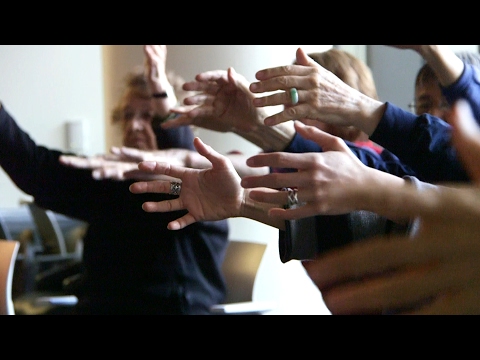 6:26 Why people with Parkinson’s are dancing at Stanford’s Neuroscience Health Center "Dance for PD® is an innovative therapy that uses movement and music to help people with Parkinson’s disease hold off the ravages of the condition. Originating at the famed Mark Morris Dance group ...
 3:05 Stanford researchers develop brain-controlled typing for people with paralysis A clinical research publication led by Stanford University investigators has demonstrated that a brain-to-computer hookup can enable people with paralysis to type via direct brain control at the hi...
 1:03:11 When Bad Things Happen to Privileged People: Marginalization and the Construction of Crisis Dara Strolovitch http://www.princeton.edu/csdp/people/display_person.xml?n..., associate professor of gender and sexuality studies at Princeton University, discusses the political construction...
 1:27:16 Stanford Rathbun Lecture 2017 - Ruth Bader Ginsburg Rathbun Visiting Fellow 2017, Ruth Bader Ginsburg, Associate Justice of the Supreme Court of the United States, shares her vision for a meaning life while in conversation with The Rev. Professor Ja...
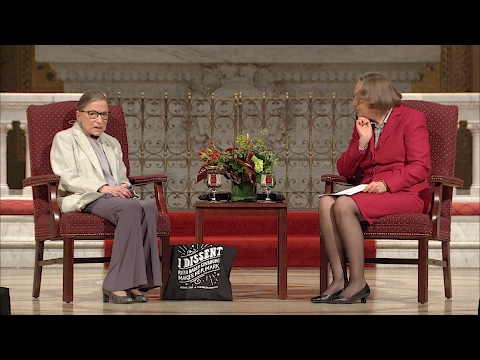 2:03 Stanford Rathbun Lecture 2017 Highlights: Ruth Bader Ginsburg Ginsburg, an associate justice of the U.S. Supreme Court, offered her personal reflections on life during the event in Stanford Memorial Church. The lecture honors the late Stanford Law School Prof...
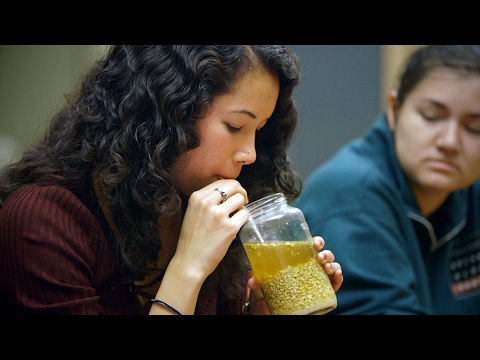 2:13 Stanford students recreate 5,000-year-old Chinese beer recipe Students brewed an ancient beer during class with Stanford archaeologist Li Liu, who discovered evidence of earliest beer-making in China as part of her recent research.
 4:45 Stanford Provost Persis Drell As she becomes provost of Stanford University, Persis Drell shares her thoughts on the role, the Stanford community and the university’s future.
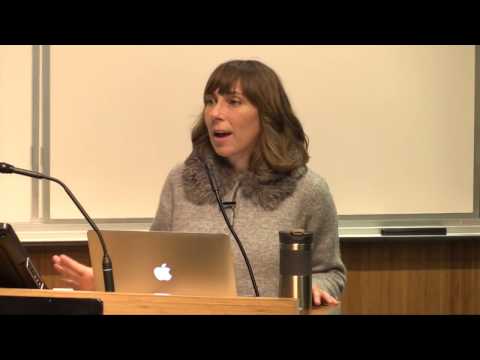 46:17 Come Out & Play Festival SF: Creating Human Connection Through Play From the Interactive Media & Games Seminar Series; Catherine Herdlick a Creative Producer & Entrepreneur at the California College of Arts, discusses the Come Out and Play SF event. Every fall, Com...
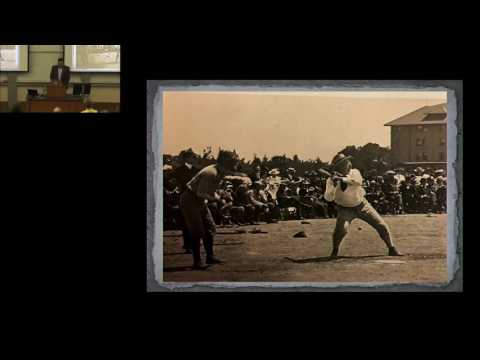 1:05:54 Stanford Athletics, Physical Education & Recreation: How It All Began, 1891-1892 Stanford Deputy Athletics Director Ray Purpur gave a talk on the early days of Stanford athletics, specifically, in 1891-1892.
 19:40 Crumpets and Badonkadonks: Creating Tiny Tina From the Interactive Media & Games Seminar Series: Ashly and Anthony Burch explore the creative process that turned Tiny Tina into the sort-of-beloved character she is today. Starting with the brai...
 33:52 Digital Seriality: Code & Community in the Super Mario Modding Scene From the Interactive Media & Games Seminar Series; Shane Denson, Assistant Professor in Department of Art & Art History at Stanford University, considers how tools and methods of digital humanities...
 46:21 Digital Spirits in the Material World: Dynamic Physical Media for Interaction and Display From the Interactive Media & Games Seminar Series; Sean Follmer, Assistant Professor of Mechanical Engineering at Stanford University explores three questions: 1) How can we bring interaction into ...
 53:20 Virtual Espionage: GCHQ and NSA Take on MMOs From the Interactive Media & Games Seminar Series; Peter Krapp, Professor of Film & Media / Visual Studies and a member of the Departments of English and of Informatics at the University of Califor...
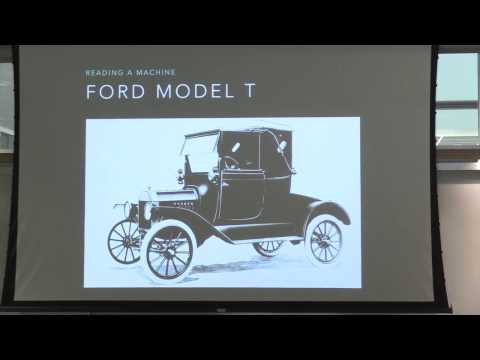 50:30 No Generation From the Interactive Media and Games Seminar Series; Nathan Altice, a Teaching Professor, Computational Media at the Jack Baskin School of Engineering, UCSC examines how consumer electronics press ...
 45:52 A Tale of Two Jousts: Multimedia, Game Feel, and Imagination From the Interactive Media & Games Seminar Series; Douglas Wilson an Assistant Professor of Game Design at RMIT University and Co-Owner Die Gute Fabrik argues that the term "game feel" is so useful...
2:09 Stanford initiative examines public art in Iran As part of the Stanford Iranian Studies Program, the initiative on Art, Social Space and Public Discourse in Iran features art exhibitions, film screenings and music. 6:26 Why people with Parkinson’s are dancing at Stanford’s Neuroscience Health Center "Dance for PD® is an innovative therapy that uses movement and music to help people with Parkinson’s disease hold off the ravages of the condition. Originating at the famed Mark Morris Dance group ... 3:05 Stanford researchers develop brain-controlled typing for people with paralysis A clinical research publication led by Stanford University investigators has demonstrated that a brain-to-computer hookup can enable people with paralysis to type via direct brain control at the hi... 1:03:11 When Bad Things Happen to Privileged People: Marginalization and the Construction of Crisis Dara Strolovitch http://www.princeton.edu/csdp/people/display_person.xml?n..., associate professor of gender and sexuality studies at Princeton University, discusses the political construction... 1:27:16 Stanford Rathbun Lecture 2017 - Ruth Bader Ginsburg Rathbun Visiting Fellow 2017, Ruth Bader Ginsburg, Associate Justice of the Supreme Court of the United States, shares her vision for a meaning life while in conversation with The Rev. Professor Ja... 2:03 Stanford Rathbun Lecture 2017 Highlights: Ruth Bader Ginsburg Ginsburg, an associate justice of the U.S. Supreme Court, offered her personal reflections on life during the event in Stanford Memorial Church. The lecture honors the late Stanford Law School Prof... 2:13 Stanford students recreate 5,000-year-old Chinese beer recipe Students brewed an ancient beer during class with Stanford archaeologist Li Liu, who discovered evidence of earliest beer-making in China as part of her recent research. 4:45 Stanford Provost Persis Drell As she becomes provost of Stanford University, Persis Drell shares her thoughts on the role, the Stanford community and the university’s future. 46:17 Come Out & Play Festival SF: Creating Human Connection Through Play From the Interactive Media & Games Seminar Series; Catherine Herdlick a Creative Producer & Entrepreneur at the California College of Arts, discusses the Come Out and Play SF event. Every fall, Com... 1:05:54 Stanford Athletics, Physical Education & Recreation: How It All Began, 1891-1892 Stanford Deputy Athletics Director Ray Purpur gave a talk on the early days of Stanford athletics, specifically, in 1891-1892. 19:40 Crumpets and Badonkadonks: Creating Tiny Tina From the Interactive Media & Games Seminar Series: Ashly and Anthony Burch explore the creative process that turned Tiny Tina into the sort-of-beloved character she is today. Starting with the brai... 33:52 Digital Seriality: Code & Community in the Super Mario Modding Scene From the Interactive Media & Games Seminar Series; Shane Denson, Assistant Professor in Department of Art & Art History at Stanford University, considers how tools and methods of digital humanities... 46:21 Digital Spirits in the Material World: Dynamic Physical Media for Interaction and Display From the Interactive Media & Games Seminar Series; Sean Follmer, Assistant Professor of Mechanical Engineering at Stanford University explores three questions: 1) How can we bring interaction into ... 53:20 Virtual Espionage: GCHQ and NSA Take on MMOs From the Interactive Media & Games Seminar Series; Peter Krapp, Professor of Film & Media / Visual Studies and a member of the Departments of English and of Informatics at the University of Califor... 50:30 No Generation From the Interactive Media and Games Seminar Series; Nathan Altice, a Teaching Professor, Computational Media at the Jack Baskin School of Engineering, UCSC examines how consumer electronics press ... 45:52 A Tale of Two Jousts: Multimedia, Game Feel, and Imagination From the Interactive Media & Games Seminar Series; Douglas Wilson an Assistant Professor of Game Design at RMIT University and Co-Owner Die Gute Fabrik argues that the term "game feel" is so useful...
How to practice effectively...for just about anything - Annie Bosler and...
source: TED-Ed 2017年2月27日
View full lesson: http://ed.ted.com/lessons/how-to-prac...
Mastering any physical skill takes practice. Practice is the repetition of an action with the goal of improvement, and it helps us perform with more ease, speed, and confidence. But what does practice actually do to make us better at things? Annie Bosler and Don Greene explain how practice affects the inner workings of our brains.
Lesson by Annie Bosler and Don Greene, animation by Martina Meštrović.
Subscribe to:
Comments (Atom)